
Young people need room for their questions and good reasons for trusting Christ. A winter camp reminded me anew how closely spiritual encouragement and understandable defense of the faith belong together.
Looking back at the 2017 winter camp
Questions are an opportunity to learn together. If young people are to account for their faith in daily life, we must help them understand the message themselves and examine objections honestly.
Six talks and many questions
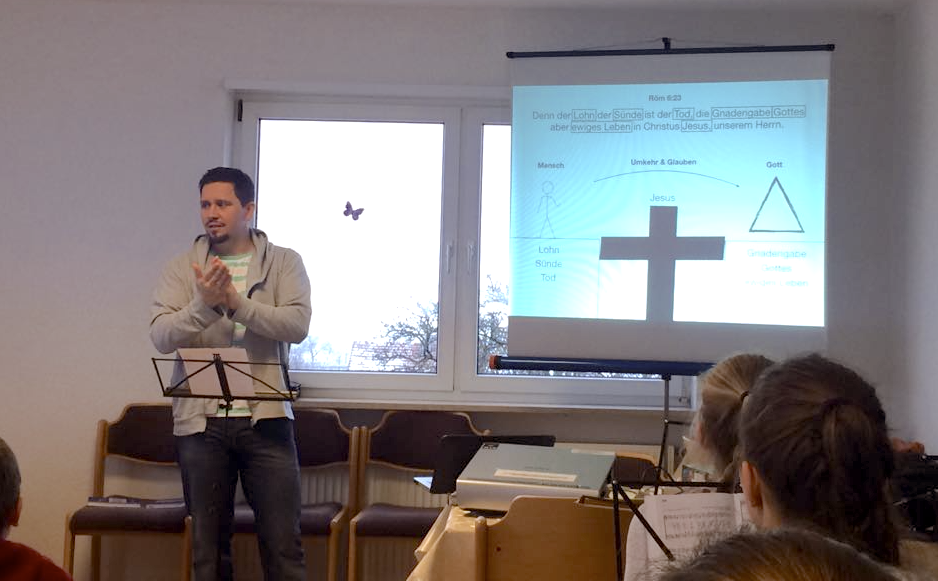
Between Christmas and New Year’s Eve 2017, my wife, our child, and I attended the winter camp of the Mannheim Liebenzell Fellowship in Schönbrunn. It was my third ministry visit to this fellowship. I was able to give six talks in total, morning and evening.
The average age was surprisingly low. Edifying and evangelistic messages that could speak well to younger listeners were therefore appropriate. The teenagers and young people listened with interest and attention. One evening developed into an extended discussion about defending the faith; there were many questions.
No one came for a personal pastoral conversation at the time. That belongs in an honest report just as much as joy over the interest. Attention and questions are valuable even when no immediately visible result can be inferred from them.
What we can learn from such conversations
Young Christians encounter people with very different convictions at school, in training, at university, and in leisure time. Some questions are curious, others challenging. Those knowing their faith only as familiar church language can quickly find themselves at a loss.
Helpful equipping does not begin with memorizing the cleverest possible replies. It begins with understanding: What is the gospel? Why do we trust Jesus? What does the Bible actually claim, and what have we merely adopted as a familiar formulation?
The importance of thinking and believing
Understand, examine, and trust
First Peter 3:15 connects readiness to give a reasoned answer with gentleness and respect. The verse demands no omniscience. It invites us to explain our hope understandably. ‘I do not know yet; let us investigate’ may better reflect this attitude than a hasty answer.
Acts 17:11 also offers an important emphasis: the hearers in Berea receive the message readily while examining the Scriptures. Openness and examination are connected. Questions thereby become no opposite of faith, but can lead to deeper understanding.
Three helpful steps
Listen: What question is the young person really asking?
Explain: What biblical context helps?
Stay involved: What open question shall we work on together next?
Assurance about Christ must be distinguished from certainty about every interpretation of our own. We may trust his Word and remain ready to learn. This relieves young people of pressure to supply a perfect solution to every problem immediately.
We want to accompany young Christians so that they trust Christ, think for themselves, and encounter others with clarity and respect.
The questions at this camp were a reminder and encouragement toward that goal. Churches serve the next generation by teaching understandably, enabling honest conversations, and patiently investing time.
Historical ministry report on the 2017 camp; the subsequent reflections deepen its concern. Bible passages: 1 Peter 3:15–16; Acts 17:11.